Tel / WhatsApp: +852-70974333 E-mail: andy@pursueartlife.com

- All
- Product Name
- Product Keyword
- Product Model
- Product Summary
- Product Description
- Multi Field Search
Please Choose Your Language
Views: 0 Author: Site Editor Publish Time: 2025-04-03 Origin: Site


Alec Monopoly’s real name is Alec Andon. He was born in New York City. He began as a graffiti artist. He got ideas from city life and pop culture. In 2008, things changed for Alec Monopoly. The financial crisis made his art important and timely.
| Year | Event | Impact on Alec Monopoly |
|---|---|---|
| 2008 | Economic crash | Monopoly Man became a symbol of greed and social commentary. |
People saw Alec use the Monopoly Man to talk about the financial system. Many thought his art showed their worries about capitalism and consumerism. Alec’s art moved from the streets to galleries and murals. How did Alec Monopoly become a famous artist around the world?
Alec Monopoly, whose real name is Alec Andon, began as a graffiti artist in New York City. He got ideas from city life and pop culture. The 2008 economic crash made more people notice Alec's art. He used the Monopoly Man to talk about greed and capitalism. When Alec moved to Los Angeles, he found new chances. He met more people and reached a bigger crowd. He also got close to the entertainment world. Alec used social media and worked with celebrities. This made him more famous. People liked his art and wanted it. His story shows how street art can change culture around the world. It also starts talks about selling art and what art really means.
Alec Monopoly, whose real name is Alec Andon, grew up in New York City. He started painting on city walls when he was only 12 years old. The busy streets and colorful graffiti inspired him every day. Alec loved skateboarding, which helped him explore different neighborhoods and see new art styles. He often watched other artists create murals and tags. This experience shaped his own creative ideas.
Alec learned from famous street artists. He admired Banksy for his bold messages and Mr. Brainwash for his playful style. These artists showed Alec that art could speak about society and make people think. He also felt the energy of New York’s art scene. The city’s mix of music, fashion, and street culture gave him many ideas for his work.
Alec Monopoly biography shows that his early years in New York built a strong foundation for his future. He learned to use art as a way to share his thoughts and feelings with others.
In 2006, Alec made a big decision. He moved from New York to Los Angeles. This change opened new doors for him. Los Angeles had a different art scene. The city offered more walls for murals and more chances to meet other artists. Alec found new inspiration in the bright colors and sunny weather.
The move helped Alec reach a larger audience. He started to paint bigger pieces and show his work in new places. Los Angeles also connected him with people in the entertainment industry. This helped his art become part of pop culture. Alec Monopoly’s biography shows that moving to Los Angeles was a turning point. It set the stage for his rise as a global artist.
Alec Monopoly got ideas from what happened in 2008. He watched news stories and played Monopoly at home. When Bernie Madoff was arrested, Alec thought of new art. He started to paint the Monopoly Man on city walls. Alec used this character to talk about problems with capitalism and buying too much stuff. His art showed how greed can hurt people. Alec made the Monopoly Man stand for big business scandals.
Alec Monopoly’s art used the Monopoly Man to show problems like greed and buying too much. He painted the character holding money bags and sometimes added symbols that made people talk about culture.
Alec’s murals made people ask questions about society. Some saw the Monopoly Man wearing Star of David pants and worried about stereotypes. Alec wanted to celebrate Purim, but some people felt upset. His art showed that culture needs care and respect. Alec Monopoly’s work made people think about history and pain.
| Year | Event | Alec Monopoly’s Art |
|---|---|---|
| 2008 | Economic crash | Monopoly Man became a symbol of capitalism and corporate greed |
| 2008 | Bernie Madoff arrest | Alec Monopoly responded with new artwork |
| 2008 | Public debate | Art sparked conversations about culture and representation |
People noticed Alec Monopoly’s art very quickly. They saw the Monopoly Man and understood the message. The art showed their worries about money and art. Alec Monopoly became popular fast. Art dealers and collectors wanted his art for themselves.
Alec Monopoly made himself mysterious. He wore masks and kept his name secret. This made people want to know more.
He used pop culture and famous images. The Monopoly Man made people think of games they played as kids and was easy to share.
Alec worked with luxury brands and famous people. These deals helped him reach more fans.
He posted his art on social media. Fans followed him and shared his work online.
Alec Monopoly sold special art pieces in small numbers. This made his art worth more.
Alec Monopoly became successful because he connected with people. His art talked about real problems. He used culture and memories to build a strong name. The art market wanted his work. Alec Monopoly became famous all over the world.
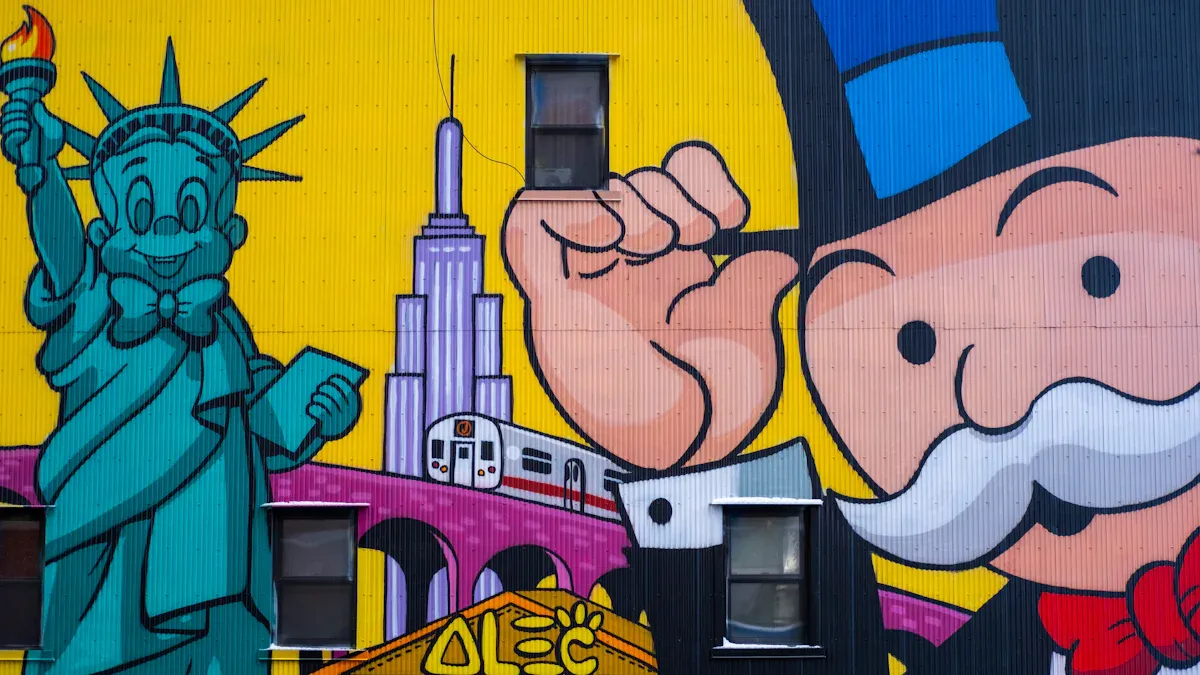
Alec Monopoly is different because he mixes street art and pop culture. He uses the Monopoly Man in his art. This character stands for greed and wealth. Alec Monopoly’s paintings have bright colors and famous faces. His art talks about how people care too much about money and things.
Art experts say Alec’s style has stayed the same. They think his art changed from deep meaning to more branding. Some compare Alec Monopoly to other artists who make art for business. Even with these thoughts, Alec still gets lots of attention in the art world.
Alec mixes street art with pop culture.
The Monopoly Man shows up in many artworks and means wealth.
His art uses bold colors and well-known people.
Critics say his style stays the same and is about branding.
Alec Monopoly’s art is easy to spot. The Monopoly Man reminds people of playing the game. Alec’s art is popular because it connects old memories and today’s issues.
Celebrities help make Alec Monopoly more famous. Many stars buy his art and go to his shows. The table below lists some celebrities who own Alec Monopoly’s paintings.
| Celebrity | Relationship to Alec Monopoly's Artwork |
|---|---|
| Tyga | Supported at art unveiling |
| Miley Cyrus | Collector of artwork |
| Snoop Dogg | Collector of artwork |
| Adrien Brody | Collector of artwork |
| Robin Thicke | Collector of artwork |
| Iggy Azalea | Collector of artwork |
| Seth Rogen | Collector of artwork |
Social media lets Alec Monopoly share his art with the world. He wears a mask to stay mysterious. He uses the Monopoly Man so people can relate to his art. Alec works with brands and stars, which makes him more popular. He posts on Instagram and YouTube to show fans his art and stories. Special art pieces make people excited and want to buy them.
Alec keeps his identity secret with a mask.
He uses pop culture characters like the Monopoly Man.
Working with celebrities helps him get noticed.
Social media lets him talk to fans everywhere.
Limited art pieces make his work more wanted.
Alec Monopoly’s story shows how art, culture, and social media fit together. Celebrities love his art, and his online posts keep fans interested.
Alec Monopoly has fans in many countries. His art is seen on walls in cities like London, Paris, and Hong Kong. People from different cultures buy his work. The Monopoly Man is a symbol that many people know. Alec goes to new places to paint murals and show his art in galleries. His collection has pieces that show the spirit of each city he visits.
Many people think Alec’s success shows street art can reach the world. Some believe the art market now likes graffiti and pop culture. Others worry that street art is changing its meaning. Here are some debates about Alec Monopoly’s international reach:
Some people say selling street art helps artists, but others think it takes away the original message.
Gentrification can happen when street art brings investors, which may push out local communities.
The graffiti community sometimes feels upset when artists sell their work or work with brands. Some believe this hurts the true meaning of the art.
Art critics and big magazines have noticed Alec Monopoly’s style. They say his graffiti-style art uses bright colors and bold lines. His art often uses the Monopoly Man to make fun of greed and consumerism. Each piece tells a story about modern life and asks viewers to think about society.
The art world has mixed feelings about Alec’s place in modern art. Some praise his skill to connect with people all over the world. Others question if selling art or working with brands changes the meaning of street art. Here are some common views:
Alec Monopoly’s art is popular because it uses satire and social commentary.
Many believe his work makes people question what they see in culture.
Some critics worry that making street art for the art market can erase its true purpose.
Selling art and brand deals can cause debate about what makes art real.
Alec Monopoly’s journey shows how art can change and grow. His work starts conversations about success, culture, and the future of street art.
Alec Monopoly got famous by making himself stand out. He used pop culture icons and worked with celebrities. His art makes people think about money and society. Many experts talk about where he fits in the art world.
| Debate Source | Focus |
|---|---|
| Wall Street Journal | Commercial success and public view |
| Artnet | Legitimacy in the art establishment |
New artists can learn from how he builds his brand. They can see how he makes his art special and tries new markets.
Alec Monopoly’s real name is Alec Andon. He lived in New York City as a kid. His story shows he started with graffiti art. Later, he became successful in the art world.
Alec Monopoly got popular because he used the Monopoly Man in his art. His artwork talked about culture and society. The art market liked his style during the economic crash. This helped him become more famous.
Alec Monopoly’s paintings are special because they mix street art and pop culture. He uses bright colors and famous characters in his work. The Monopoly Man shows up often and connects with many people.
Alec Monopoly’s story shows city life and street culture shaped his art. He learned from other artists and used his own experiences. His art talks about society and success.
People can find Alec Monopoly’s collection in galleries, on city walls, and online. His art is shown in many countries. The art market values his work, and collectors want his paintings.
The art world is a dynamic landscape where artists emerge, challenge conventions, and leave indelible marks on culture. Among contemporary street artists, Alec Monopoly has carved a niche that blends popular culture with incisive social commentary. Rising from the urban art scenes of New York and Los Angeles, he has become internationally renowned for his distinctive style that features iconic characters and critiques of modern capitalism. This article explores the multifaceted journey of Alec Monopoly, examining the elements that propelled him to fame and how his work resonates in today's society.
Born as Alec Andon in 1986 in New York City, Alec Monopoly was immersed in an environment teeming with artistic expression. The city's vibrant street art scene in the late 20th century served as a formative backdrop for his creative development. Influenced by graffiti legends like Jean-Michel Basquiat and Keith Haring, Alec began experimenting with spray paint and stencils, cultivating a unique style that would later define his career. The urban landscape became both his canvas and his muse, inspiring a blend of traditional graffiti techniques with contemporary themes.
A central element of Alec Monopoly's fame is his adaptation of the Monopoly Man, Rich Uncle Pennybags, as a recurring figure in his artwork. This character, synonymous with wealth and capitalism, allowed Alec to critique economic systems while engaging a broad audience familiar with the Monopoly board game. By depicting the Monopoly Man in various scenarios—often highlighting greed, excess, and the pitfalls of wealth—Alec creates a satirical narrative that is both accessible and thought-provoking.
The use of such a well-known icon serves as a powerful tool for commentary on the socioeconomic landscape. Alec's artwork frequently addresses themes of financial instability, corruption, and the impact of money on human relations. By placing the Monopoly Man in urban settings, luxury environments, or juxtaposed with other cultural symbols, he highlights the pervasive influence of capitalism in everyday life. This approach resonates with viewers who recognize the underlying critiques masked by the playful imagery.
While the appropriation of the Monopoly Man has garnered attention, it has also raised questions regarding intellectual property rights. Alec Monopoly navigates these complexities by transforming the character into a vessel for artistic expression, thus engaging in a dialogue about the boundaries of art and propriety. This tension adds depth to his work, inviting discussions about originality, ownership, and the role of art in challenging legal norms.
In pursuit of broader opportunities, Alec relocated to Los Angeles in 2006. The city's burgeoning art scene, coupled with its status as a cultural melting pot, provided fertile ground for his artistic endeavors. Los Angeles offered a unique blend of urban spaces and celebrity culture, which Alec adeptly leveraged to enhance his visibility. The move facilitated collaborations with other artists and exposure to new markets, significantly contributing to his rising profile.
Alec Monopoly's ascent was accelerated through strategic associations with celebrities and influencers. His artwork caught the attention of high-profile figures in the entertainment industry, leading to commissions and collaborations that expanded his reach. Notably, his relationships with patrons and collectors in Hollywood amplified his presence both within and beyond the art community. These connections served as catalysts, introducing his work to international audiences and increasing demand for his pieces.
The rise of digital platforms revolutionized how artists interact with audiences, and Alec Monopoly was among those who capitalized on this shift. By curating a strong social media presence, he cultivated a global following eager to engage with his content. Platforms like Instagram became venues for showcasing new works, behind-the-scenes glimpses, and interactions with fans. This direct communication channel enabled Alec to bypass traditional gatekeepers in the art world, democratizing access to his art.
Alec's consistent use of branding elements—such as his signature portrayal of the Monopoly Man and his practice of obscuring his face with a bandana—created a memorable persona. This image reinforced the mystique often associated with street artists while simultaneously making his brand instantly recognizable. The anonymity added intrigue, encouraging speculation and discussion among fans and critics alike. This calculated presentation played a significant role in differentiating him in a crowded art landscape.
Alec Monopoly's work transitioned from the streets to galleries and auction houses, marking his entry into the commercial art market. His pieces began fetching significant sums, reflecting both his growing popularity and the market's appetite for urban art. This commercial success validated his approach and attracted the attention of investors and collectors seeking to capitalize on emerging trends. The monetization of his art also sparked debates about the commodification of street art and its implications for authenticity.
A pivotal aspect of Alec's fame is his collaborations with luxury brands. Partnerships with companies like Tag Heuer and Phillip Plein extended his influence into the realms of fashion and design. These collaborations merged the exclusivity of luxury goods with the edginess of street art, appealing to consumers interested in contemporary and cross-cultural aesthetics. The synergy between his brand and these companies amplified his visibility and introduced his work to non-traditional art audiences.
The international exhibition of Alec Monopoly's work has been instrumental in cementing his status as a globally recognized artist. Showcased in prominent galleries and art fairs across Europe, Asia, and the Middle East, his pieces have attracted a diverse array of collectors and enthusiasts. These exhibitions not only highlight the universal themes present in his work but also demonstrate the increasing acceptance and integration of street art into the mainstream art world.
Alec's ability to adapt his art to different cultural contexts has furthered his international appeal. He often incorporates local symbols and addresses region-specific themes in his exhibitions abroad. This localization strategy resonates with audiences worldwide, allowing his social commentary to transcend language barriers and cultural differences. The universality of his messages about wealth and society finds relevance in various global settings.
Despite his success, Alec Monopoly's career has not been devoid of criticism. Some art critics argue that his work lacks originality due to its heavy reliance on pre-existing characters and symbols. Others contend that his commercial pursuits dilute the rebellious spirit traditionally associated with street art. These critiques raise important questions about the evolving nature of art, authenticity, and the balance between artistic integrity and commercial viability.
Alec Monopoly addresses these critiques by emphasizing the intentionality behind his work. He argues that recontextualizing familiar icons serves to critique societal norms and provoke thought. Regarding commercial collaborations, he posits that they provide platforms to reach wider audiences and bring street art into new domains. This dialogue underscores the complex relationship between contemporary artists and the mechanisms of fame and success.
Alec Monopoly's impact extends beyond his personal career, influencing the broader trajectory of street art. His success demonstrates how artists can navigate the intersections of art, commerce, and media to build impactful careers. By bridging the gap between underground art scenes and mainstream recognition, he has paved the way for other artists to explore non-traditional pathways. His approach exemplifies the potential for street art to engage with global audiences and issues.
As a figure who has successfully translated street art into international acclaim, Alec Monopoly serves as an inspiration for emerging artists. His career trajectory highlights the importance of adaptability, branding, and strategic use of technology. Additionally, his thematic focus encourages artists to engage with pertinent social issues through accessible mediums. The blend of aesthetic appeal and critical commentary in his work offers a compelling model for contemporary artistic expression.
Media exposure has been a significant factor in Alec Monopoly's rise to fame. Coverage by prominent publications, features on television, and appearances at high-profile events have amplified his public persona. The media's fascination with his enigmatic image and the fusion of luxury with street culture has generated narratives that capture public interest. This symbiotic relationship illustrates how modern artists can harness media channels to enhance their visibility and influence.
Alec's intentional curation of his public image, from concealing his identity to engaging in high-profile collaborations, reflects a nuanced understanding of celebrity culture. By controlling certain aspects of his narrative, he maintains an aura of mystery while promoting engagement with his work. This balance between accessibility and exclusivity contributes to a compelling personal brand that captivates audiences.
The ascent of Alec Monopoly to international fame is a multifaceted phenomenon that intersects art, culture, and commerce. His strategic use of iconic imagery, social media savvy, and engagement with both street and luxury markets have positioned him uniquely in the contemporary art world. While debates about his methods and the commercialization of street art persist, his influence on the genre and his role in shaping modern artistic paradigms are undeniable.
As the discourse around his work continues, so does the evolution of his art. For enthusiasts and critics alike, the journey of Alec Monopoly offers rich insights into the dynamics of fame, the power of branding, and the enduring impact of art that engages with societal themes.


