Tel / WhatsApp: +852-70974333 E-mail: andy@pursueartlife.com

- All
- Product Name
- Product Keyword
- Product Model
- Product Summary
- Product Description
- Multi Field Search
Please Choose Your Language
Views: 0 Author: Site Editor Publish Time: 2026-01-18 Origin: Site
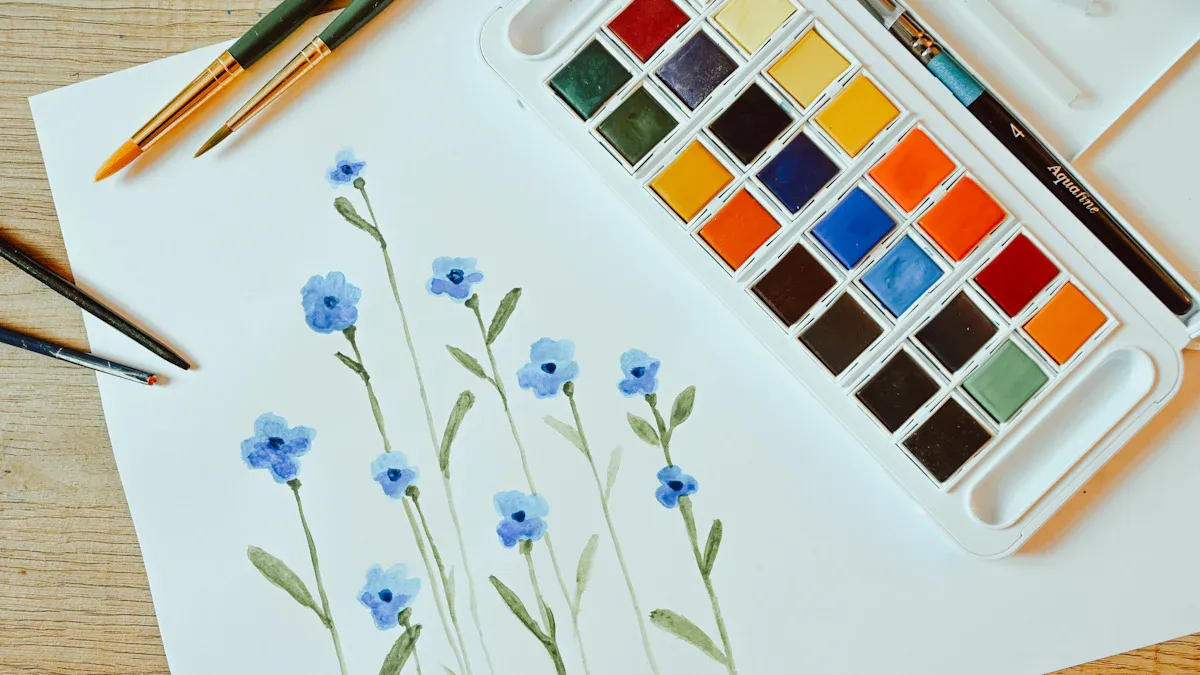
You want to paint the easiest flower? Start with the daisy! Many flowers look simple, but the daisy shines for beginners. Its bright petals and basic shapes make your first painting fun. You do not need fancy skills—just a little courage and a splash of color. Give it a try!
Start your painting journey with daisies. Their simple shapes and bright colors make them perfect for beginners.
Use basic supplies like paper, acrylic paints, and a round brush. You don’t need fancy tools to create beautiful art.
Mistakes are part of the process. Embrace them, layer your paint, and enjoy learning as you paint.
When you want to start painting flowers, you probably wonder which one is the easiest flower to paint. The answer is simple: the daisy. You can spot a daisy by its round yellow center and white petals that spread out like rays of sunshine. This flower stands out because you do not need to worry about tricky shapes or complicated details. You just draw a circle and add some straight lines for petals. That’s it!
Daisies help you build confidence. You can finish your first painting quickly and feel proud of your work. Many people choose daisies because they look cheerful and bright. You can use any colors you like, but the classic white and yellow always look fresh. If you want to try other beginner-friendly blooms, you have plenty of choices. Here are some flowers that many beginners love to paint:
Sunflowers
Poppies
Lavender
Cherry Blossoms
Roses (Loose Style)
Tulips
Hydrangeas
Coneflowers (Echinacea)
Forget-Me-Nots
You can try these flowers later, but starting with a daisy makes painting feel easy and fun.
Daisies have a simple design. You do not need to draw fancy curves or tiny details. The center is just a circle, and the petals are long ovals or lines. This makes the daisy the easiest flower for beginners. You can use a pencil to sketch the shape, then fill it in with paint. If you make a mistake, you can fix it easily.
Let’s look at how daisies compare to other flowers with easy shapes and colors:
Flower Type | Shape Description | Color Variations |
|---|---|---|
Daisies | Central disc with surrounding petals | Bright and cheerful colors |
Gerbera Daisies | Similar structure, larger petals | Wide range of vibrant colors |
Black-Eyed Susans | Central disc with elongated petals | Yellow petals with dark centers |
Marguerite Daisies | Similar to daisies, but more delicate | White petals with yellow centers |
You can see that daisies keep things simple. Their shapes do not change much, and their colors stay bright and happy. When you start painting, you want a flower that does not make you feel stressed. Daisies give you that comfort. You can focus on having fun and learning new skills.
So, if you want to try painting the easiest flower, pick a daisy. You will enjoy the process and see great results right away.

You do not need a lot of fancy tools to start painting flowers. You can use simple items that you might already have at home or can find at any art store. Here are the basics you need:
Heavy mixed-media paper or watercolor paper
Acrylic paints in colors like olive green, cadmium yellow, burnt sienna, and unbleached titanium white
A round brush (size 6–8 works well for petals and details)
A palette knife for mixing or adding texture
Old book pages if you want to add a collage background
Matte medium, gel medium, or even PVA glue for sticking collage pieces
A brayer (roller) for smooth paint layers
You can use a glue-stick cap or a lip balm tube to stamp fun circles for extra effects. These supplies help you get started with painting without stress.
Tip: If you do not have all these items, just use what you have. The most important thing is to start creating!
You can add a few extras to make your flower art even more interesting. These are not required, but they can help you try new things and have more fun:
Watercolor paint pens for bright lines
Fine-line pens for details
Washi tape for borders or decoration
Modeling paste or a simple stencil for raised patterns
Small bits of tissue paper or fabric scraps
Metallic leaf or mica powder for a shiny touch
You can mix and match these extras as you like. Try different tools and see what you enjoy most. Painting flowers is all about having fun and exploring your creativity.

You want your daisy to look bright and balanced. Start with a pencil and a blank page. Lightly draw a small circle in the middle. This will be the center of your flower. Next, draw a bigger circle around it. This outer circle shows how far your petals will reach. Try to keep the circles even. If you want a tip, use the ratio rule: make the big circle about three or four times wider than the small one.
Now, draw lines from the center out to the edge, like the spokes on a wheel. These lines help you place your petals evenly. You do not need to draw every petal yet. These lines are just guides. If you make a mistake, erase it gently and try again. A good sketch makes painting much easier.
Tip: Always sketch lightly. You can erase pencil marks after you finish painting.
Get your brush ready. For the petals, use a round brush. Dip it in white paint and add a little light gray. This mix gives your petals a soft, natural look. Start at the center dot and press the brush out toward the edge. Lift the brush at the end of each stroke. This makes the petals look thin and delicate.
Paint each petal along your guide lines. Make some petals longer and some shorter. This adds depth and keeps your daisy from looking flat. Do not worry if every petal is not perfect. Real daisies have petals that are all a little different.
If you want your flower to look more real, add a second layer of white paint after the first dries. You can also use a smaller brush to add a touch of light blue or pale purple to the base of each petal. This trick gives your daisy a bit of shadow and makes it pop.
Note: Do not use too much paint. Thick layers can crack or look messy. Let each layer dry before adding more.
Now, focus on the center of your daisy. Mix a bright yellow, like cadmium yellow, with a little gold or orange. Use a small round brush to fill in the center circle you drew earlier. Try to keep your edges neat.
You can add a little brown or burnt sienna to one side of the center. This creates a shadow and makes the center look round. If you want a fun effect, dab your brush to make tiny dots. These dots look like the little seeds in the middle of a real daisy.
Let the center dry before you touch it again. If you rush, the colors can mix and turn muddy.
Step back and look at your daisy. Do you see any spots that need more color? Add a little more white to the tips of the petals if they look dull. Use a fine brush to outline a few petals with light gray or blue. This helps them stand out.
You can add a stem and a few leaves if you want. Use green paint and a small brush. Keep the lines simple and smooth.
If you make a mistake, do not worry. Wait for the paint to dry, then paint over it. Every artist fixes things as they go. The easiest flower to paint is the one you enjoy making.
Remember: Take your time. Let each layer dry. Enjoy the process of painting your daisy.
You want your flower painting to look fresh and lively. Picking the right brush makes a big difference. Try these brushes for best results:
Small brush (detail brush or round size 2) helps you paint tiny lines and add fine details.
Medium round brush (size 6) works well for petals and soft edges.
Large round brush (size 16) lets you cover bigger areas quickly.
Filbert brush (size 12) gives you smooth, rounded strokes for leaves and petals.
Large wash or flat brush (like a Mottler) is great for backgrounds.
You can switch brushes as you go. Experiment and see which ones feel comfortable in your hand.
Start with simple shapes when you paint easy flowers to paint. Draw circles for the center and ovals or lines for petals. You do not need to make every petal perfect. Flowers look natural when you mix short and long petals. Try sketching lightly so you can erase and adjust as you paint.
Blending colors brings your flower painting to life. Here are some easy ways to blend:
Mix your colors to create extra shades. This helps your flowers look more interesting.
Lighten your main color with white to add highlights and depth.
Use a split primary palette for maximum saturation. This keeps your colors bright and avoids muddy mixes.
You can try blending on your palette or right on the paper.
Mistakes happen, but you can fix them. Layer your paint to cover errors and build depth. If you use watercolor, let the paint flow and turn mistakes into cool textures. Masking fluid helps you keep white areas clean and correct tricky shapes.
Remember: Every artist makes mistakes. You can always adjust your painting and learn something new. Enjoy the process!
You might want to try painting more flowers after you finish your daisy. Many flowers have simple shapes and bright colors, so you can have fun and learn new skills. Here are some great choices for your next painting:
Sunflowers make a bold statement on your canvas. You can sketch their big, round centers and long, skinny petals with ease. These flowers only need a few colors, so you do not have to worry about mixing lots of paint. You can finish simple sunflower paintings quickly, which makes them perfect for paint parties or a relaxing afternoon at home.
Feature | Why It’s Easy for You |
|---|---|
Shape | Big center and straight petals |
Structure | Thick stalks and wide leaves |
Petals | Long and skinny, easy to paint |
Try adding green, pointy bracts around the center for extra detail. You will love how sunflowers brighten up your art.
Poppies have bright red petals and a dark center. You can paint them with just a few brushstrokes. Their petals look like soft, wavy circles, so you do not need to worry about perfect lines. Poppies look great in groups, and you can use simple shapes to fill your page.
Lavender is another easy flower for beginners. You can use cotton swabs to dab purple paint and make the tiny petals. For the stems, press a painted skewer or the handle of your brush onto the paper. You can add darker purple dots after the first layer dries. Lavender looks beautiful even if your shapes are not perfect.
Tip: Try using kitchen tools to add texture to your lavender. You might discover a new favorite technique!
Cherry blossoms, or sakura, are famous for their soft pink petals. People love painting them because they stand for beauty and hope. You can paint the petals with simple brush dabs. Cherry blossoms remind you that life is precious and always changing. They make a lovely subject for your art.
Tulips have smooth, oval petals and bright colors. You can paint them with just a few strokes. If you want to try more flowers, here are some other easy options:
Coneflowers
Zinnias
Dianthus
Marigolds
Cosmos
Yarrow
Columbine
Phlox
Calendula
You can pick any of these flowers as your next project. Each one helps you practice new shapes and colors. As you paint more, you will see your skills grow.
Keep exploring! Every flower you paint brings you closer to becoming a confident artist.
You can begin by painting daisies because they are the easiest. Most beginners feel happy and proud when they finish their first daisy. Use short brush strokes and try mixing your paint colors. Add layers of color to help you learn new skills. Try painting different flowers to find your favorite style. Here are some ways to keep going:
Strategy | Description |
|---|---|
Engaging Classes | Beginner classes give you help and ideas. |
Inspirational Books | Flower painting books show you creative ideas. |
Supportive Community Feedback | Other artists can cheer you on. |
Keep painting, have fun, and let your creativity show!
Let the paint dry. Paint over the mistake with your background color. Try again. Every artist fixes things. You can do it!
You can use what you have at home. Try crayons, markers, or colored pencils. The most important thing is to start creating.
Yes! You can paint petals and centers right away. Free painting helps you relax and enjoy the process. Give it a try!