Tel / WhatsApp: +852-70974333 E-mail: andy@pursueartlife.com

- All
- Product Name
- Product Keyword
- Product Model
- Product Summary
- Product Description
- Multi Field Search
Please Choose Your Language
Views: 0 Author: Site Editor Publish Time: 2026-01-24 Origin: Site
Nude paintings have changed as people’s ideas about beauty, identity, and power have changed. Ancient art showed female nudes as signs of fertility and goddesses. This showed what people believed back then. The Renaissance brought back interest in the female nude. Artists focused on beauty and making things look real. They also looked at love and power. Modern artists question old rules. They show many different body types. They change what beauty means in today’s art. The male gaze has shaped how female nudity is shown. It often makes women into objects in art.
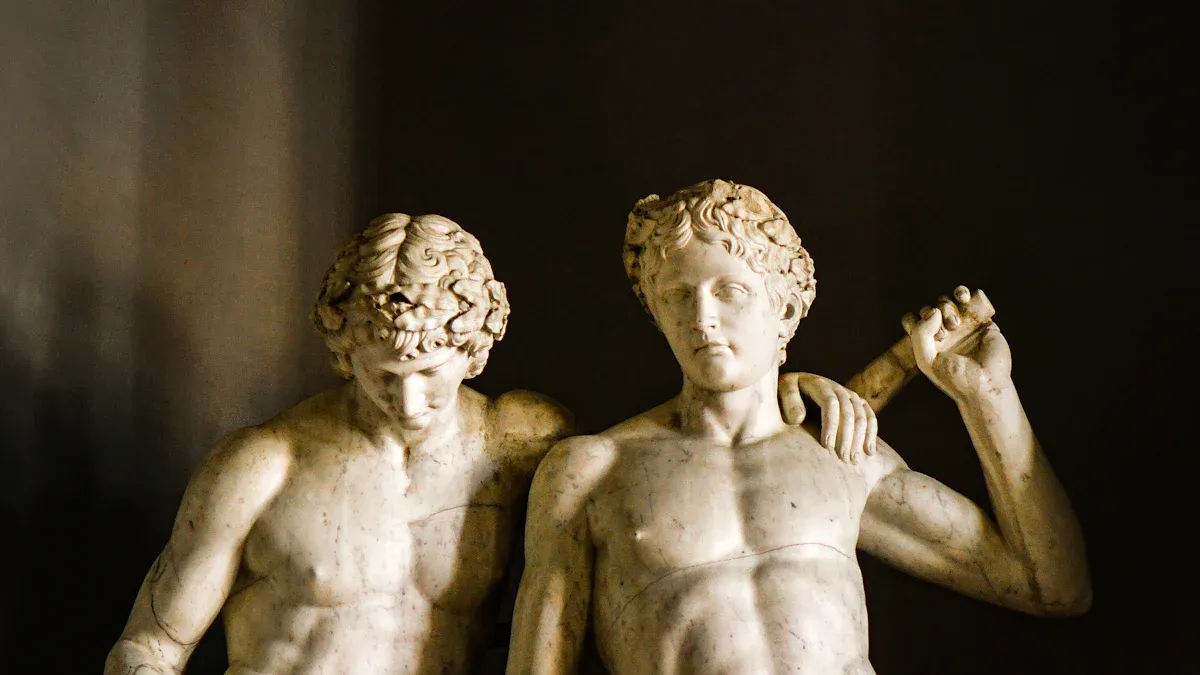
Nude art started in ancient times. Artists made female nude figures to show ideas about fertility and life. Ancient artifacts show how nudity shaped beliefs and customs.
The Venus of Willendorf is a famous example of a fertile female nude. It was made between 28,000 B.C. and 25,000 B.C.
Sculptures from the Shunga Empire in India show graphic female nudes. These were made from 187 to 78 B.C. Artists used nudity to show beauty and power.
In ancient societies, female nudity in art meant fertility, beauty, and the divine. Artists only showed female nudes as mythical or supernatural figures. This showed what people believed about the body and divinity. When you look at early nude paintings and sculptures, you see how artists gave meaning to nudity in art.
In classical antiquity, artists gave female nudes special meanings. Many works show themes like beauty, fertility, and divinity. The sculpture of Aphrodite by Praxiteles shows how artists made the female form look perfect. They mixed sensuality with spiritual purity. This celebrated both physical traits and cultural values about femininity and the divine.
Artists changed how they saw nudity. In ancient times, female nudity often had negative meanings. It was linked to violence or prostitution. Male nudity was praised more. The Knidian Aphrodite by Praxiteles changed this idea. Artists started to accept female nudes in art. Later, Christianity became important. There were fewer nude paintings and sculptures. Religious themes became more popular. The Renaissance brought back interest in the human form. Artists began to celebrate female nudes in mythological stories.
When you study nude art from ancient and classical times, you learn how artists used nudity to show cultural values and ideals. Nude paintings and sculpture helped shape what nudity meant in art and influenced artists later.
During the Renaissance, artists changed how they showed nudity. They looked at art from ancient Greece and Rome for ideas. Old myths and stories inspired them. This helped them make new kinds of nude paintings. Artists started to show the female nude as a sign of beauty and perfection. They wanted the body to look real and alive.
Artists learned more about the human body during this time. They drew from real people and studied bodies closely. Some even looked inside the body to learn more. This made their art look more lifelike. You can see muscles, skin, and movement in their work. Leonardo da Vinci and Pollaiuolo studied the body carefully. Their art shows how much they learned.
The Renaissance also changed how people saw nudity. Before, the Church had strict rules about showing nudes. Now, artists used nudity to tell stories from myths and religion. They painted goddesses and nymphs with beauty and meaning. Nudity in art became a way to talk about love, purity, and power.
Botticelli’s "The Birth of Venus" is a good example. Venus stands nude as she rises from the sea. The painting shows both beauty and modesty. The artist wanted to show the body and the ideals of the time.
Artists put nudes in private places like bedrooms or gardens. This made the art feel more personal and sometimes bold.
Artists also showed themes of desire and strong women. The nude was not just about the body. It was about telling stories and feelings. How artists painted nudity showed new ideas about women and their roles.
Many famous nude paintings were made during the Renaissance. These works still inspire people today. Some of the most important nude art comes from this time.
Painting Title | Artist | Year |
|---|---|---|
The Birth of Venus | Sandro Botticelli | c. 1484-1486 |
You might know other famous nude paintings from this time:
Pisanello's Luxuria (c.1426) shows a nude woman lying down and looking boldly at the viewer. This painting feels more open than older art.
Titian's Venus Anadyomene (c.1520) shows a soft and lovely nude. The artist was very good at painting skin and shape.
Dosso Dossi's Myth of Pan (1524) has a graceful female nude. The painting adds to the stories told in art.
When you look at these paintings, you see new art skills. Artists used light, shadow, and color in new ways. They made the nude look real and full of feeling. Artists often painted gentle poses and direct eye contact. This made viewers feel close to the subject.
Raphael's picture can also be seen as mixing two main ideas about women: woman as lover and woman as someone who cares for others.
Notice that Durer’s female nudes have small breasts. They are set apart from each other and from the navel.
The idea of 'gaze' shows gender politics in Renaissance art. It often gave more power to male viewers.
The male gaze shaped many nude paintings. Artists often painted women to please men. This made the nude more about desire than the person. Few women were artists then, so most nude art showed men's ideas.
Nudity in Renaissance art became a way to explore beauty, love, and power. Artists used the nude to show both the body and the spirit. Nude paintings became a sign of new ideas and freedom in art.
Nude paintings changed a lot from Baroque to Romantic times. Baroque artists liked to paint women with round bodies. These women looked wealthy and healthy. Peter Paul Rubens made many paintings like this. His art showed the female nude as strong and lively.
In Romantic art, things changed. Artists started to show women as gentle and dreamy. They wanted to share feelings and stories in their art. Sometimes, a woman stood for an idea, like Liberty in Eugène Delacroix’s painting. Artists cared more about the person’s story and feelings. Jean-Léon Gérôme painted 'Phryne revealed before the Areopagus.' In this painting, you see the woman’s own story and freedom.
The style changed from perfect bodies to personal stories.
Artists put women in scenes that were more complicated.
Nudity started to mean feelings and who the person was.
By the late 1800s, beauty meant being delicate, like a porcelain doll.
You can see how nude art changed with each time period. Artists used nudity to show new ideas about women and society.
When you look at nude art, you notice the male gaze. This means artists often painted women for men to look at. The male gaze changed how artists showed nudity. It made women look perfect for men. Artists often turned women into objects of desire. This happened in both female and male nude art. The male gaze has lasted from the Renaissance until now.
The male gaze makes women look like objects for men.
Artists often made nude art to please men.
Both female and male nude art show this idea.
Society’s rules about decency also changed nude art. Some people thought nudity in art was okay. Others wanted to block it. These rules changed in different places and times. You can see how laws and social media affect what artists can show.
Evidence | Description |
|---|---|
Miller v. California (1973) | Made a rule for what is obscene art, based on what people think is okay. |
Community Standards | Local people decide if nude art is allowed or not. |
Social Media Policies | Sites like Facebook have strict rules, so artists cannot share nude art. |
You can see that people have always argued about nudity in art. Artists and viewers keep asking what counts as art. Nudity in art still causes strong feelings and changes how you see beauty and identity.

Artists changed how they show the nude in modern art. They do not just follow old rules anymore. Some artists keep the body looking real. Others use shapes and colors that are not realistic. This makes you wonder what nudity means now.
Here is a table that shows how female nudes changed:
Period | Characteristics of Female Nude Depictions | Key Differences from Earlier Periods |
|---|---|---|
Ancient Greece | Idealized forms, symbolizing power and athleticism, limited female depictions until the 4th century BC. | Earlier works were constrained by religious and moral standards, focusing on idealization. |
Renaissance | Secular, idealized beauty, with a voyeuristic appeal. | Shift from religious to secular themes, emphasizing aesthetic beauty rather than moral lessons. |
18th Century | Increased voyeurism and erotic connotations, with symbolic interpretations. | Evolved into more complex art forms, separating eroticism from mere nudity. |
20th Century | Total deregulation of views, broadening attitudes towards nudity. | Contemporary works challenge traditional norms, emphasizing realism and individualism. |
Modern artists use many styles. Tom Wesselmann uses simple lines and bright colors. In "Monica Sitting with Mondrian," he gives only a few details. The picture feels bold and strong. His "Great American Nudes" series shows how Pop Art changes nude art. Andy Warhol and Roy Lichtenstein also use new ways to show the female body. Their art makes you think about what is real.
You can find many kinds of nude paintings today. Here are some well-known examples:
Brian Irving: Girl standing by abstract, cobalt green vermillion
StellArt Studio: Erotic Female Body Figure - Fresh Colorful Painting Style
Susan Adams: Standing Nude in Black Stockings with Flower and Bird in Hair
ANA MARIA EDULESCU: Colorful Nude
Endre Roder: Red Necklace
Some artists use shapes that are not real. Others use bright colors or new materials. Nudity in modern art is not just about the body. It is about ideas and feelings.
Some artists mix old and new styles. John Currin paints nudes that look classic and modern. Amy Sillman uses color and shape in new ways. Tracey Emin creates dream-like images of the female nude. Grigorii Pavlychev uses strong colors for bold nudes.
You see women artists like Suzanne Valadon and men like Amedeo Modigliani. Valadon’s "The Bathers" shows women with strong shapes and bright colors. Modigliani’s "Nude on a Blue Cushion" gives a calm and peaceful nude. These artists show that nude art keeps changing.
Note: Modern nude painting lets you see many sides of nudity. You can find beauty, power, and new ideas in each work.
Artists today talk about body image and beauty in new ways. They show many shapes, sizes, and colors. This helps you see that beauty is not just one thing.
Many artists challenge old ideas about nudity. Frida Kahlo and Georgia O'Keeffe show female power in their art. Kahlo paints herself nude to show her true self. O'Keeffe uses flowers to talk about female strength. Nudity in their art is about more than looks.
Other artists use photos and new media. Marina Abramović and Cindy Sherman use performance and pictures to talk about identity. Jacqueline Hayden changes photos to add body hair and cellulite. This makes you think about what is normal. Tina Barney shows nude bodies in everyday life. Sherry Camhy and Lucian Freud paint the nude honestly. They show that nudity can be strong and confident.
Elisa Valenti paints women with soft shapes. She says, "My work reflects the images I wish I had seen, beautiful luscious women doing ordinary things." Her art helps people feel good about their bodies.
You see more diversity in nude paintings now. Artists like Sophia Wallace and Lynn Bianchi show many kinds of bodies and backgrounds. They help you see that nude art can include everyone. This makes you think about beauty in new ways.
The debate about beauty and diversity shapes how you see the nude today. Feminist artists ask hard questions about the male gaze and who decides what is beautiful. More art talks about race, disability, and sexuality. There is no single way to show the female body. You see many identities and stories.
Here is a table of some recent controversies in nude art:
Artist | Year | Controversial Work | Description |
|---|---|---|---|
Lynda Benglis | 1974 | Ad in Artforum featuring her nude with a prosthetic dildo | This ad challenged norms and sparked significant debate about female representation in art. |
Carolee Schneemann | 1975 | Performance of Interior Scroll | Her performance art piece involved nudity and was a bold statement on female agency and sexuality. |
Nudity in art still causes strong feelings. Artists use the nude to talk about freedom and power. You can find beauty in many forms. Modern nude painting helps you see the world in new ways.
You can see that female nude paintings look different now. Artists show real bodies and do not hide flaws. This helps people think about beauty in new ways. Bonnie Parker paints herself in strong ways. Her art makes people talk about feeling powerful. In Paris, women artists broke old rules. They looked at who they were and what made them special. Experts like Winckelmann and Nead study how nudity and the nude affect art and life. Artists in the future will keep changing what beauty means.
Winckelmann says the Medici Venus stands for beauty.
Nead talks about how learning art changes how we see the female nude.
The Renaissance showed women had two roles in art.
"Nude" means the body is shown with beauty and meaning. "Naked" means someone has no clothes and may feel embarrassed or exposed.
Artists use female nudes to show beauty, power, and stories. They share ideas about culture, history, and identity in these paintings.
Female nudes are found in many cultures. Western art made them well-known, but ancient India, Africa, and Asia also have their own nude art traditions.
Museums pick art for its history, meaning, and public interest. Curators try to balance the art’s value with what the community and laws allow.
Artist | Notable Work |
|---|---|
Sandro Botticelli | The Birth of Venus |
Titian | Venus of Urbino |
Amedeo Modigliani | Nude on a Blue Cushion |
You can see their art in museums and books.