Tel / WhatsApp: +852-70974333 E-mail: andy@pursueartlife.com

- All
- Product Name
- Product Keyword
- Product Model
- Product Summary
- Product Description
- Multi Field Search
Please Choose Your Language
Views: 0 Author: Site Editor Publish Time: 2026-05-25 Origin: Site
High-end interior design relies heavily on striking focal points. These visual anchors effortlessly bridge stark spatial architecture and deep emotional resonance. We know how spaces feel directly impacts guest experiences. For luxury residential and commercial hospitality projects, selecting a flower canvas painting requires careful calculation. It goes far beyond a simple aesthetic preference. Designers face a complex procurement decision. They must evaluate material longevity, exacting scale, and strict visual consistency across multiple rooms. Substandard choices often result in rapid sun fading or warped wooden frames. Such failures degrade the carefully curated atmosphere. This comprehensive guide offers a definitive framework for industry professionals. We help you systematically evaluate, select, and source premium botanical artwork. You will learn to navigate commercial durability standards seamlessly. By following these principles, you will exceed the highest luxury design expectations every time.
We must deeply understand physical substrates to ensure artwork longevity. Standard cotton blends frequently fail in commercial environments. They absorb ambient moisture rapidly. This absorption causes the canvas fibers to slacken over time. We highly recommend using poly-cotton archival canvas for professional projects. You should look for material weights of 300gsm or higher. This specific synthetic blend guarantees excellent moisture resistance. It retains optimal surface tension for years, even in fluctuating hotel corridor climates.
Large-format canvases face severe warping risks without proper frame engineering. Substandard frames use green wood or cheap MDF. These materials bow under the tension of the stretched canvas. We establish a strict requirement for kiln-dried pine or fir stretcher bars. The kiln process removes excess moisture. This prevents future bowing or twisting. A minimum 1.5-inch profile is mandatory for any gallery wrap. This thickness provides necessary structural rigidity. It also creates a premium three-dimensional presence on the wall. For pieces wider than 36 inches, you must also include center cross-bracing.
Ink formulation directly impacts long-term color longevity. UV-resistant, pigment-based inks prevent premature color degradation. Sunlit hotel lobbies and bright residential living spaces demand these superior inks. Dye-based alternatives often fade within mere months under direct sunlight. Pigment particles bind securely to the canvas fibers. They preserve vibrant floral hues for decades. Industry standards often reference ASTM lightfastness ratings. You should always verify these ratings before procuring art for high-light areas.
| Component | Standard Retail Quality | Commercial Luxury Quality |
|---|---|---|
| Canvas Substrate | 100% Cotton (prone to sagging and moisture absorption) | Poly-Cotton Archival Blend (300gsm+, moisture-resistant) |
| Stretcher Bars | Air-dried wood or MDF (under 1-inch profile) | Kiln-dried pine/fir (1.5-inch profile minimum with bracing) |
| Ink / Colorant | Dye-based inks (rapid fading in sunlight) | Pigment-based UV-resistant inks (ASTM lightfast rated) |
Choosing the right production method shapes the final aesthetic of your project. It also heavily dictates how easily you can scale the procurement process. You must weigh visual impact against budget scalability.
Original pieces deliver unmatched visual impact. Artists use impasto techniques to build rich, thick textures. Visible brushstrokes catch ambient room light beautifully. This interaction creates immense textural depth across the entire canvas. A genuine hand-painted flower art piece serves as an ultimate statement. You typically place them in residential living rooms. They also anchor luxury executive suites and boutique hotel lobbies perfectly. We see them functioning as conversation starters.
However, buyers face several important considerations here. These authentic works carry a significantly higher acquisition cost. You will see unique variations in every single piece produced. Custom commissions also require much longer lead times. You must account for artist scheduling and oil paint drying phases. This makes them less ideal for rapid, large-scale commercial rollouts.
Giclée printing offers a high-fidelity, scalable alternative. These advanced inkjet machines reproduce original works with astonishing accuracy. They capture micro-details, subtle gradients, and complex color blending perfectly. You use Giclée prints for extensive multi-room hospitality rollouts. They work flawlessly in long hallway galleries. Designers rely heavily on them for scalable interior design projects.
Producing them requires massive high-resolution source files. Any slight pixelation destroys the luxury illusion instantly. We advise using minimum 300 DPI source images. You can also enhance these prints post-production. Artisans apply hand-embellished clear acrylic gel directly over the printed image. This precise application adds highly convincing faux texture. It mimics original brushwork at a fraction of the cost.
Artwork must match the surrounding architectural language seamlessly. Floral motifs offer surprising versatility. You simply need to align the specific botanical style with your overall interior design narrative.
Modern spaces benefit from highly restrained designs. We focus on minimalist, abstract, or monochromatic floral motifs. Think of stark white lotuses or structural protea flowers. These clean styles suit modern luxury apartments perfectly. They also elevate corporate hospitality lounges without causing visual clutter. Clean lines prevent the artwork from overwhelming the viewer.
Design alignment requires careful framing choices. A piece of modern botanical wall art pairs exceptionally well with metallic floater frames. You should consider brushed gold or matte black finishes. These sharp frames add a crisp, tailored edge. They integrate the organic floral shapes smoothly into industrial or minimalist architecture.
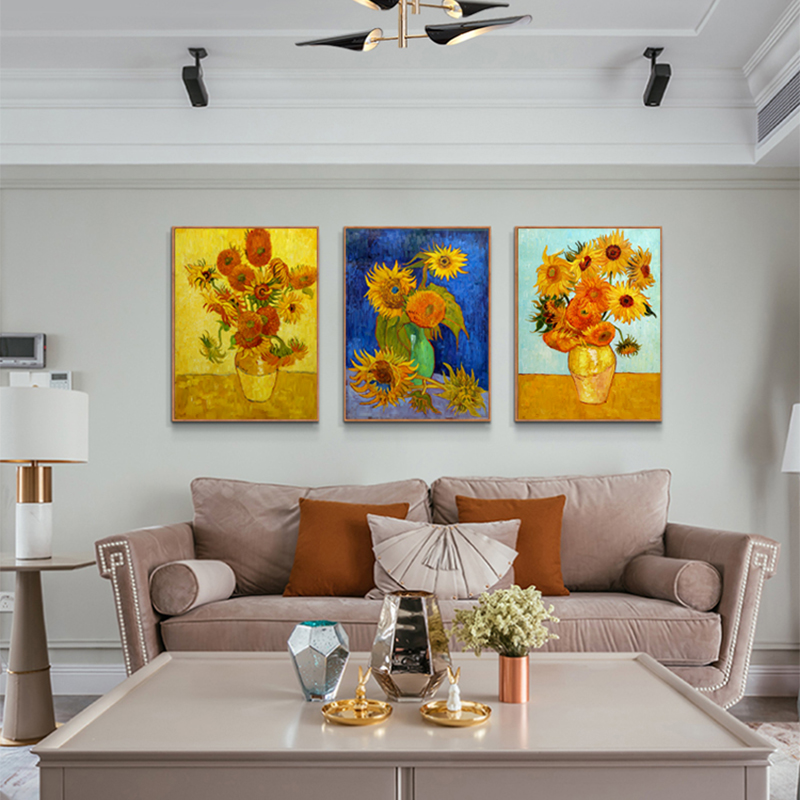
Traditional interiors often demand strong historical grounding. You might evaluate reproducing a classic Van Gogh sunflower painting. These energetic works bring instant cultural cachet to a room. The vivid warm yellows and aggressive brushwork create a welcoming, heritage atmosphere.
These reproductions fit best inside traditional luxury homes. Heritage hotels utilize them to reinforce their historic brand identities. Transitional spaces also use them effectively. They warm up austere, modern furniture arrangements. The recognizable classical motifs provide instant comfort and familiarity to guests.
Photography brings a completely different energy to commercial design. Macro-photography styling captures intense, intimate botanical details. Hyper-realistic dark moody florals remain highly popular right now. They provide intense color contrast against neutral walls. The dramatic lighting mimics classical chiaroscuro painting techniques.
Designers use them to create high-impact focal walls. You often see them anchoring upscale, modern dining rooms. Boutique hotels frequently install them as dramatic, oversized headboards. The crisp realism of the photograph contrasts beautifully with the soft, woven texture of the canvas substrate.
Commercial projects introduce rigorous logistical challenges. You must systematize the entire procurement process. Sourcing one painting for a home differs vastly from outfitting an entire resort.
We need robust strategies to maintain absolute color fidelity. Structural uniformity matters deeply across 100+ room installations. You must establish strict ICC color profiles before any printing begins. Strike-offs serve as mandatory physical proofs. Quality control teams check these physical proofs against master digital files. They use spectrophotometers to verify color matching. This strict workflow ensures every single room matches the approved design standard perfectly.
Public spaces require robust physical security and adherence to building codes. You cannot rely on standard residential picture wire.
Housekeeping staff need highly efficient cleaning protocols. Unprotected, raw canvas absorbs airborne dust and bathroom moisture easily. We must evaluate various protective varnishes carefully. You can choose between matte, satin, or gloss finishes based on the room lighting. The right varnish seals the porous canvas surface completely. It creates a durable, wipeable barrier. This allows for safe maintenance using lightly damp microfiber cloths. It prevents staff from accidentally damaging the ink layer during rapid room turnovers.
Even a premium floral oil painting loses its impact if sized incorrectly for the wall. Spatial harmony requires specific mathematical precision.
Many buyers make the common mistake of undersizing their art. A small canvas floats awkwardly on a massive, empty wall. The artwork should cover roughly 60% to 75% of the available empty wall space. This specific ratio creates intentional visual balance. It ensures the botanical motif commands the room properly without feeling entirely overwhelming.
We always align art relative to the major furniture directly below it. Follow these specific proportion guidelines for perfect placement:
You must decide between a standard gallery wrap and a modern floater frame. Gallery wraps remain frameless. The printed image continues tightly around the deep side edges. Floater frames leave a small, deliberate gap around the canvas. This shadow gap creates an elegant optical illusion.
Floater frames protect vulnerable canvas edges remarkably well. Commercial environments see heavy foot traffic and frequent luggage movement. The solid external wood or metal frame absorbs accidental impacts. Furthermore, they instantly elevate the perceived financial value of the piece. They transform a simple stretched print into a finalized, architectural element.
Finalizing your procurement decision hinges on finding a crucial balance. You must weigh the desired emotional impact of the floral motif against the rigorous physical demands of the environment. High-traffic hospitality areas demand technical resilience, structural security, and strict color consistency. Conversely, private luxury residential spaces allow for delicate impasto textures and bespoke framing choices. Understanding substrates, ink types, and proper scaling guarantees long-term success.
We encourage you to formalize your procurement process today. Start by requesting physical material samples of both the archival canvas and the kiln-dried stretcher bars. You should review digital mockups of the artwork directly in your specific space. Finally, initiate a detailed consultation for any bulk hospitality orders to ensure strict compliance. This proactive approach ensures flawless execution and lasting visual impact.
A: You should dry-dust original oil paintings gently. Use a soft, natural bristle brush to navigate textured brushstrokes safely. For varnished canvas prints, use a lightly damp microfiber cloth for wipedown maintenance. You must strictly warn housekeeping staff against using chemical solvents, bleach, or abrasive cleaners on any canvas surface. Chemicals strip varnishes quickly.
A: Yes, provided you specify the correct protective measures. You must order moisture-resistant canvas treatments and heavy-duty protective varnishes. Furthermore, the framing requires a fully closed and sealed backing. This physical barrier prevents humid air from trapping condensation, effectively stopping destructive mold growth on the reverse side.
A: A gallery wrap pulls the canvas tightly over thick stretcher bars. The staples secure the fabric entirely on the hidden back. The visible side edges feature mirrored, painted, or continued image details. A studio wrap uses thinner bars. The staples often sit visibly on the side edges, strictly requiring an external frame to hide them.
A: We rely on a strict proofing process called strike-offs. You order a small physical sample of the final print first. The production team uses standardized pantone matching and precise ICC color profiles. Once you approve the physical strike-off, printers lock those specific calibration settings for the entire bulk production run.